 MICROCEMENT USA
MICROCEMENT USA
MICROCEMENT USA
Topcret USA / Microcement in New York
Seamless microcement walls, floors and stairs installed across New York — from pre-war co-ops and Brooklyn brownstones to Westchester, Long Island and the Hamptons. Topcret USA is Official U.S. Distributor of Topcret, with over twenty years specializing in microcement.
What you are actually comparing
If you have collected quotes in New York, you have probably seen a spread of nearly two to one. That gap is not negotiation room. It is a different product, installed a different way.
A large share of what is sold as microcement here is a thin decorative coating: two or three passes, a general-purpose sealer, and a crew that was finishing drywall the week before. It photographs well on handover day. What it does over the following two years — at the thresholds, along the hallway, where afternoon light tracks across the floor — is a different conversation, and in an occupied apartment there is no quiet way to redo it.
The Topcret systems are installed in roughly seven to nine hand-troweled layers over a primer selected for that specific substrate, then sealed with a protective coat specified for the exposure that surface will actually face. Different material, different number of days on site, different result.
We are not the lowest bid and we do not compete for it. If price is the deciding factor, the honest answer is that someone will beat us, and we would rather say so now than after a walkthrough.
Buildings & conditions
New York is less about weather than about buildings — and the two together create conditions most installers underestimate.
Pre-war apartments have uneven slabs and layers of previous finishes. New high-rises have movement and deflection that a rigid surface has to accommodate. Terraces face freeze-thaw cycles that will find any weakness in a sealer. Interior heating strips humidity out of the air in winter, then summer brings it back.
Each of these changes the specification: the primer, the number of layers, the reinforcement mesh where movement is expected, and the protective sealer selected for the exposure that surface will actually face. Substrate preparation is where a New York project is won or lost, long before the first finish coat.
New York considerations
Microcement is installed in thin layers — roughly 1/8 inch total — over an existing, properly prepared substrate. In New York, that thinness is often the reason the project is possible at all.
Applications
Microcement is marketed as a floor product. Our own experience points elsewhere: in a New York apartment, the walls usually change the space more than the floor does.
Where we work
Manhattan, Brooklyn, Queens, the Bronx and Staten Island, plus Westchester County, Nassau and Suffolk, Long Island's North Shore including Sands Point, and the Hamptons.
We work directly with private owners, interior designers, architects and general contractors — mostly on renovations of existing apartments and homes rather than new construction, and on restaurants, hotels, retail and office interiors where the surface is part of the design.
Scope & cost
New York projects are scoped before they are priced, and deliberately kept few. That is what allows each one to be specified properly rather than quoted from a photograph.
The work that suits us is a full floor plate, a complete set of interior walls, a staircase finished with the floor it meets, or several of those combined across an apartment or a house. Owners planning a whole-home or whole-floor interior renovation are who we do our best work for. A single small isolated surface is usually better served by a local trade, and we will say so rather than quote something we are not the right fit for.
There is no honest price per square foot before we understand what is underneath. What moves it:
Substrate condition. The largest variable and, in New York, the least predictable — pre-war slabs, old patch repairs, uneven planes and layers of adhesive all add preparation before a single layer goes down.
Layout, not just area. One open 2,000 sq ft floor costs less per foot than five small rooms totaling the same area. Edges, corners and transitions are where the labor goes.
System and finish. Baxab®Eco for heavy traffic, EcoCemento® for a more textured look, Real Metals® or Clay® for specific effects — each with a different material and labor profile.
Building access and schedule. Service elevator windows, restricted work hours, occupied apartments and phased handover affect a New York project more than almost any other market.
Recent work
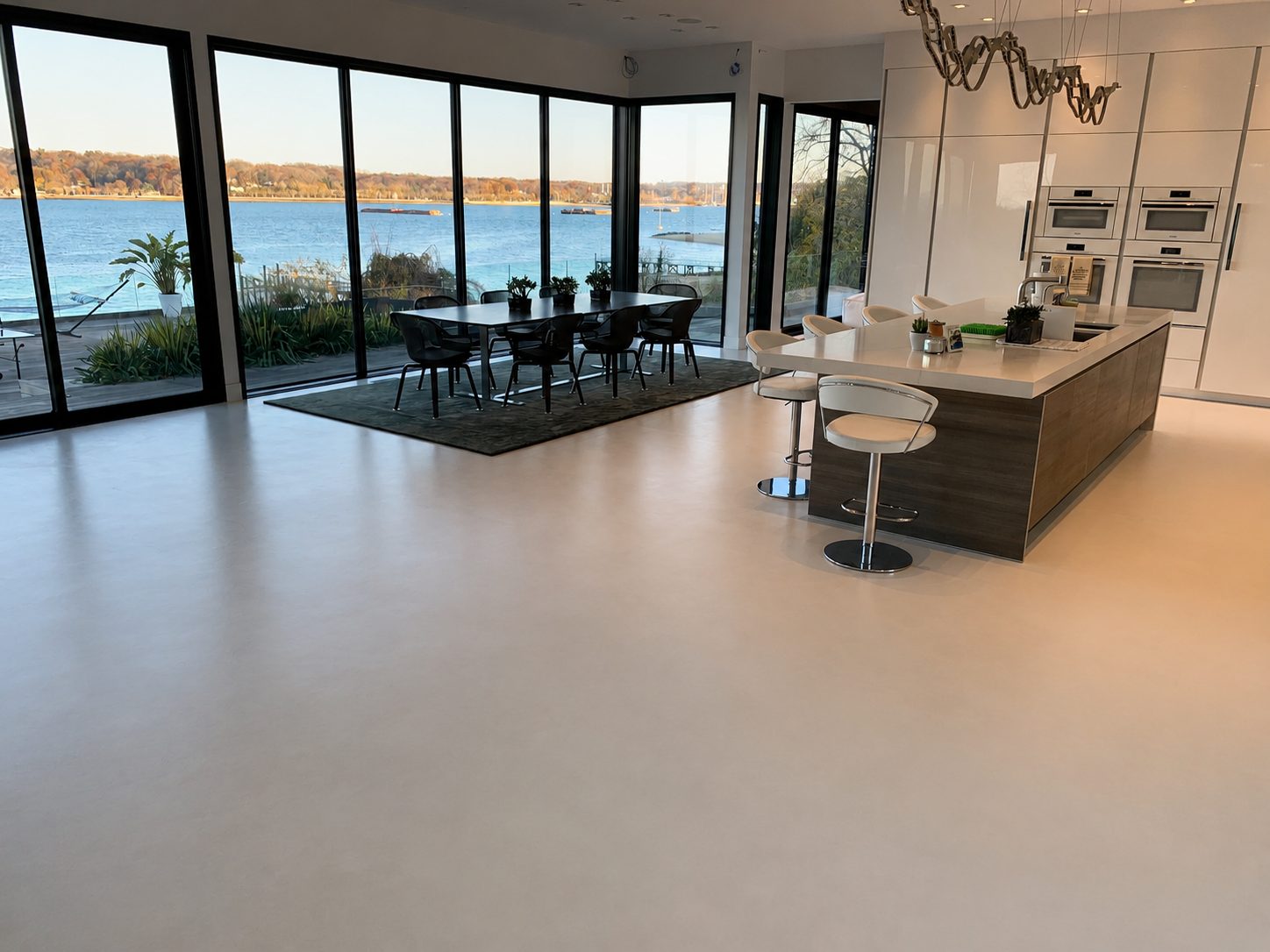 Sands Point · Waterfront kitchen & dining
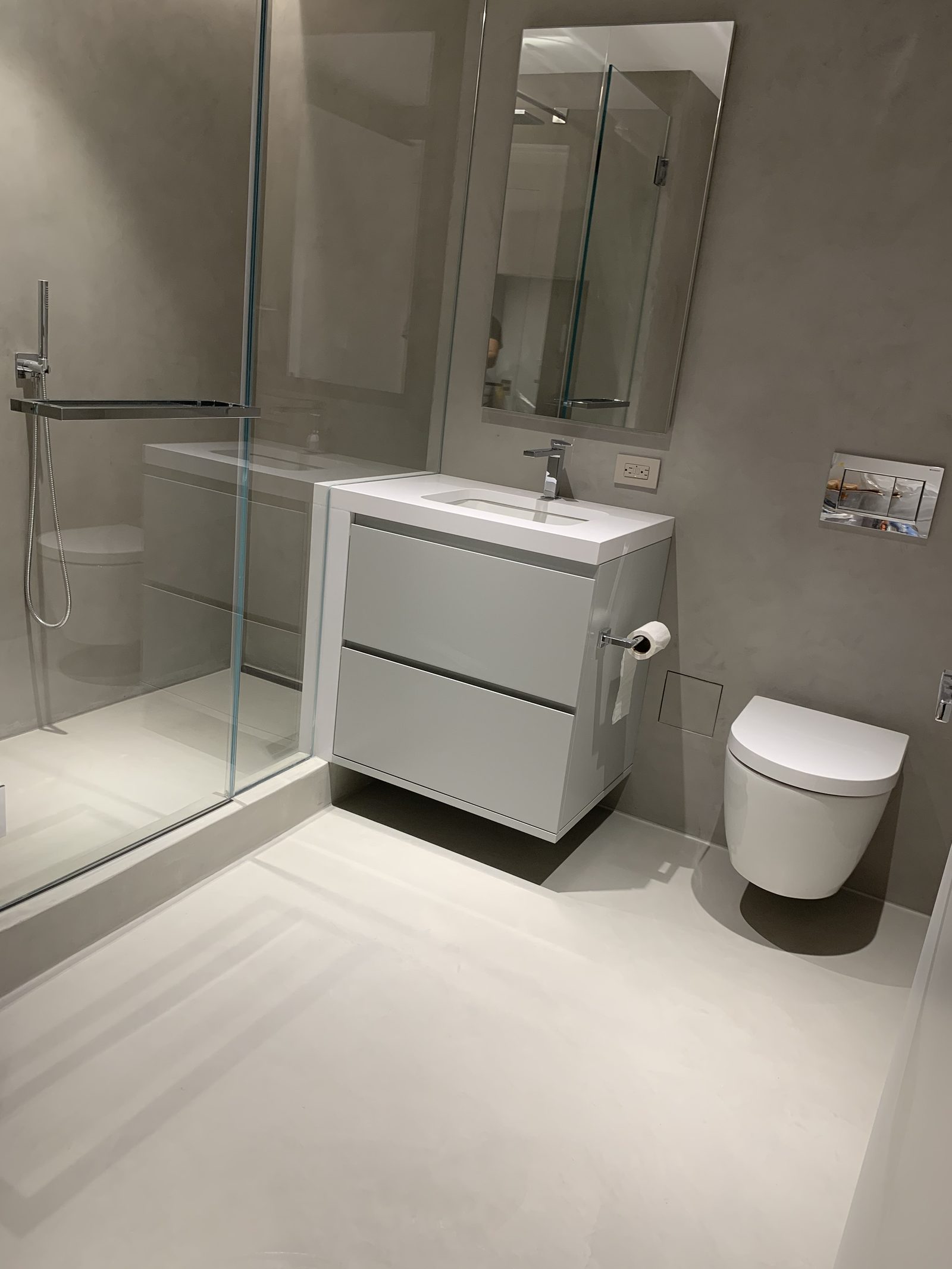 Manhattan · Microcement bathroom
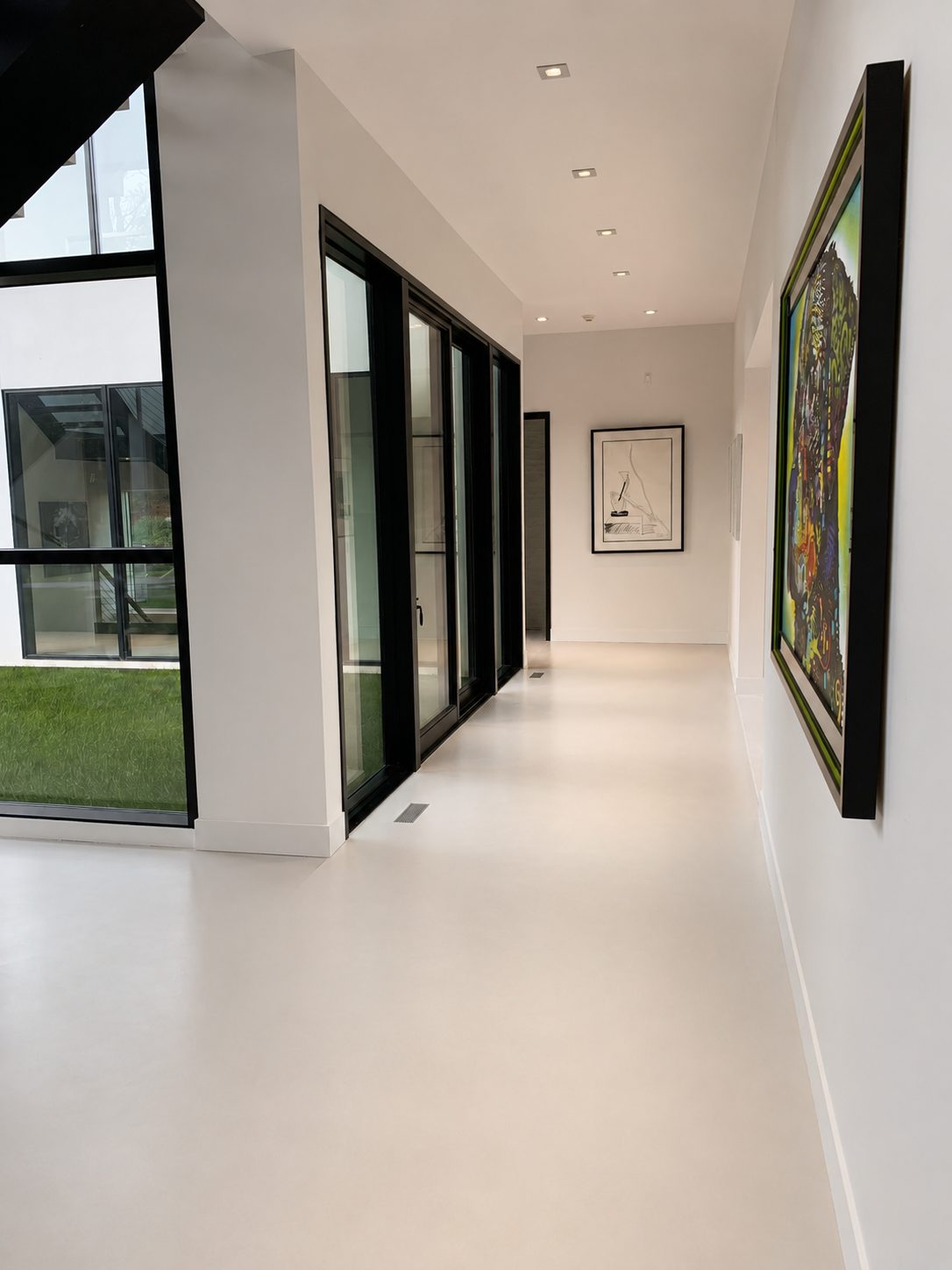 Sands Point · Gallery corridor
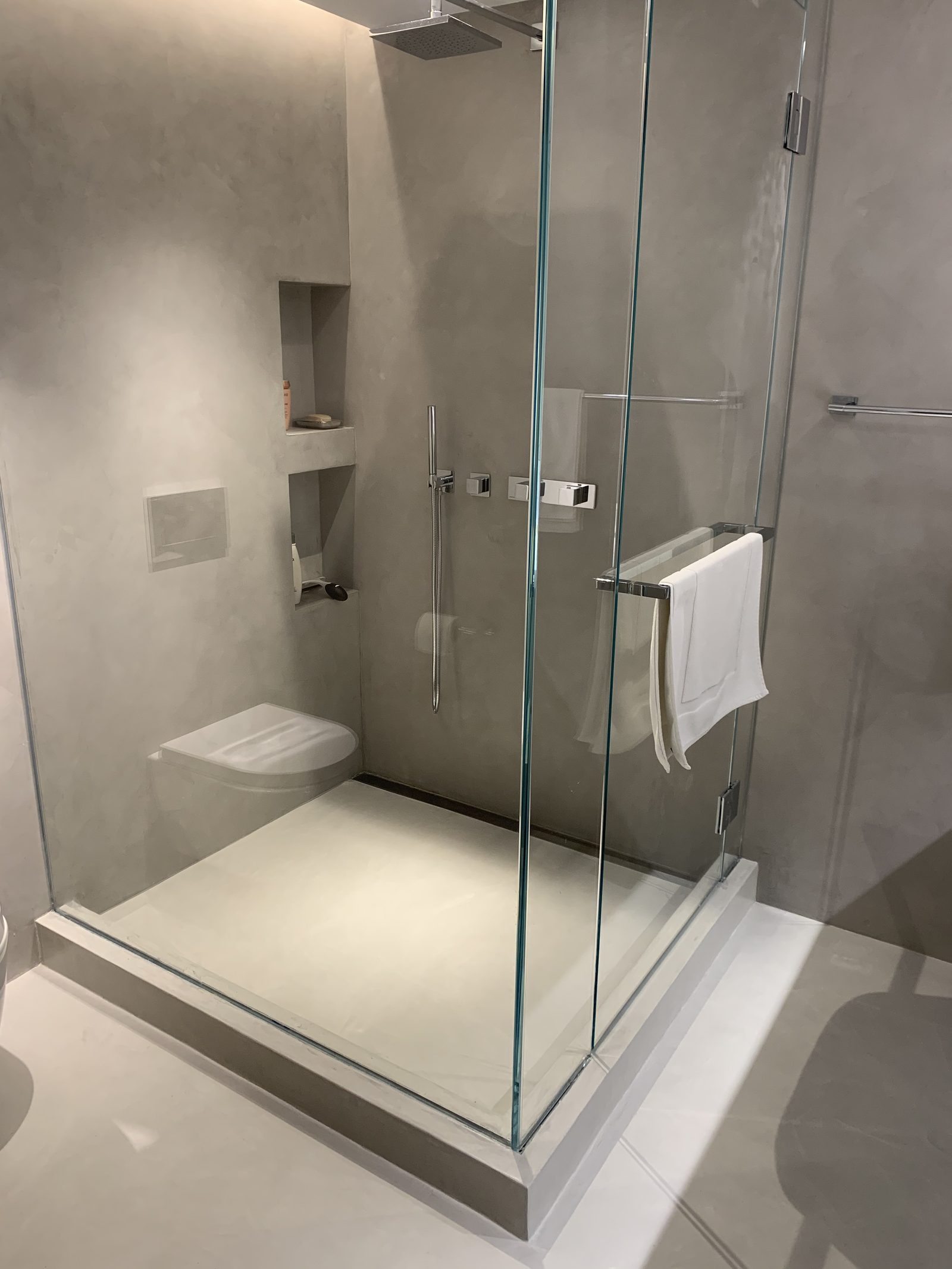 Manhattan · Walk-in shower
Specification & installation
Microcement is only as good as the system behind it, the substrate underneath it and the hands that install it. Get any one of those wrong and the finish fails — usually months later, and usually in an occupied apartment.
That is why no New York project is quoted from a photograph. Substrate, moisture, exposure, traffic and finish are established first, and the system and sealer are specified for the conditions that surface will actually face. See our Substrate Preparation Guide and Technical Resources.
Installations are carried out by qualified professionals with technical support from Topcret USA. Substrate evaluation and preparation and the execution of the work are the responsibility of the installing professional.
You speak directly with our specialists about the specification — not a sales rep.
FAQ
Tell us the rooms involved, roughly how many square feet, and what is on the floor or walls today — we'll reply with clear next steps, usually within one business day. Topcret USA — Official U.S. Distributor of Topcret.
Request a quote →Or call (917) 733-2597
Residential projects are contracted under a separate written agreement, provided and signed before any work begins. Submitting this form is a request for information and does not create a contract.