 MICROCEMENT USA
MICROCEMENT USA
MICROCEMENT USA
Topcret USA / Microcement in California
Seamless microcement floors, walls, showers and indoor-outdoor surfaces installed across California — from Los Angeles and Malibu to Orange County, San Diego, San Francisco and the Bay Area. Topcret USA is Official U.S. Distributor of Topcret, with over twenty years specializing in microcement.
Why Topcret
California has no shortage of microcement installers. What sets Topcret USA apart is simple: we don't buy someone else's product to apply it — we're the U.S. distributor of the Topcret system itself.
That means EcoCemento®, Baxab®Eco, Real Metals®, Clay® and T/Grip, installed by specialists who know these systems better than anyone. Microcement — sometimes called microtopping or micro cement — is only as good as the system behind it, the substrate underneath it, and the hands that install it.
California design leans on continuous, honest materials — and microcement delivers that only when the system, the substrate and the installation are correctly matched. Get one wrong and the surface tells on you within a year.
Movement & climate
California asks something of a surface that most of the country does not: it has to accommodate movement.
Seismic activity and hillside settlement mean substrates shift. Microcement is a rigid, jointless finish — it follows whatever is underneath it, so substrate stability is not a detail, it is the whole project. Existing cracks are treated at the source and reinforcement is specified where movement is expected.
Beyond movement: intense UV on exteriors, coastal salt air from Malibu to San Diego, Bay Area fog and moisture, and wide day-to-night temperature swings inland. Each one changes the sealer specified for that surface.
California considerations
Microcement is installed in thin layers — roughly 1/8 inch total — over an existing, properly prepared substrate. In California, what happens under that layer matters more than anywhere else we work.
Where we work
Residential and commercial projects across Los Angeles, Beverly Hills, Malibu, Orange County and San Diego, and throughout Northern California including San Francisco, the Bay Area, Silicon Valley and the Gold Country foothills — homes, restaurants, hotels, retail, offices and hospitality spaces.
We work directly with interior designers, architects, general contractors and private clients — on homes, restaurants, hotels, retail spaces and hospitality projects where the surface is part of the design, not an afterthought.
Cost
There is no honest single price per square foot for microcement — and anyone quoting one before seeing the space is guessing.
Substrate condition. The single biggest variable, and in California it is compounded by movement. Existing cracks, hillside settlement and slab condition all have to be addressed before a rigid surface is installed over them. Substrate preparation is where most projects are won or lost.
Area and layout. Square footage matters, but so does shape. One open 2,000 sq ft floor costs less per foot than five small bathrooms totaling the same area — edges, corners and transitions are where the labor goes.
System and finish. Baxab®Eco for heavy traffic, EcoCemento® for a more textured look, Real Metals® or Clay® for specific effects — each has a different material and labor profile.
Exposure and waterproofing. Wet areas and exteriors require membranes and specific sealers that interior dry areas do not.
Access and schedule. Hillside access, occupied properties, coordination with architects on design-led builds, and permitting or HOA requirements in some communities all affect cost.
We quote after reviewing the actual conditions — square footage, substrate, exposure and finish. That is the only way to give a number that will still be true when the job is done.
Recent work
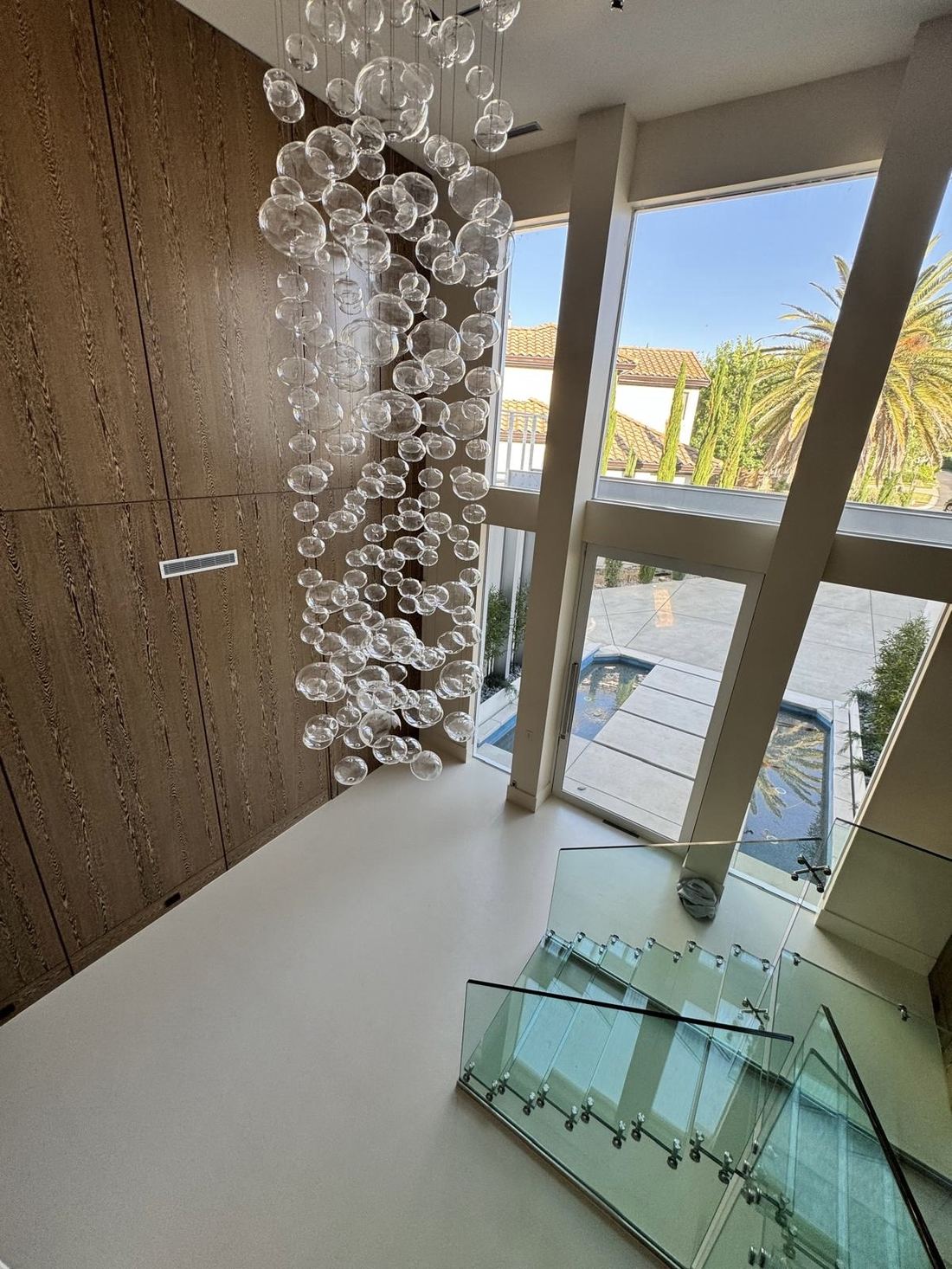 Gold Country · Entry & staircase floor
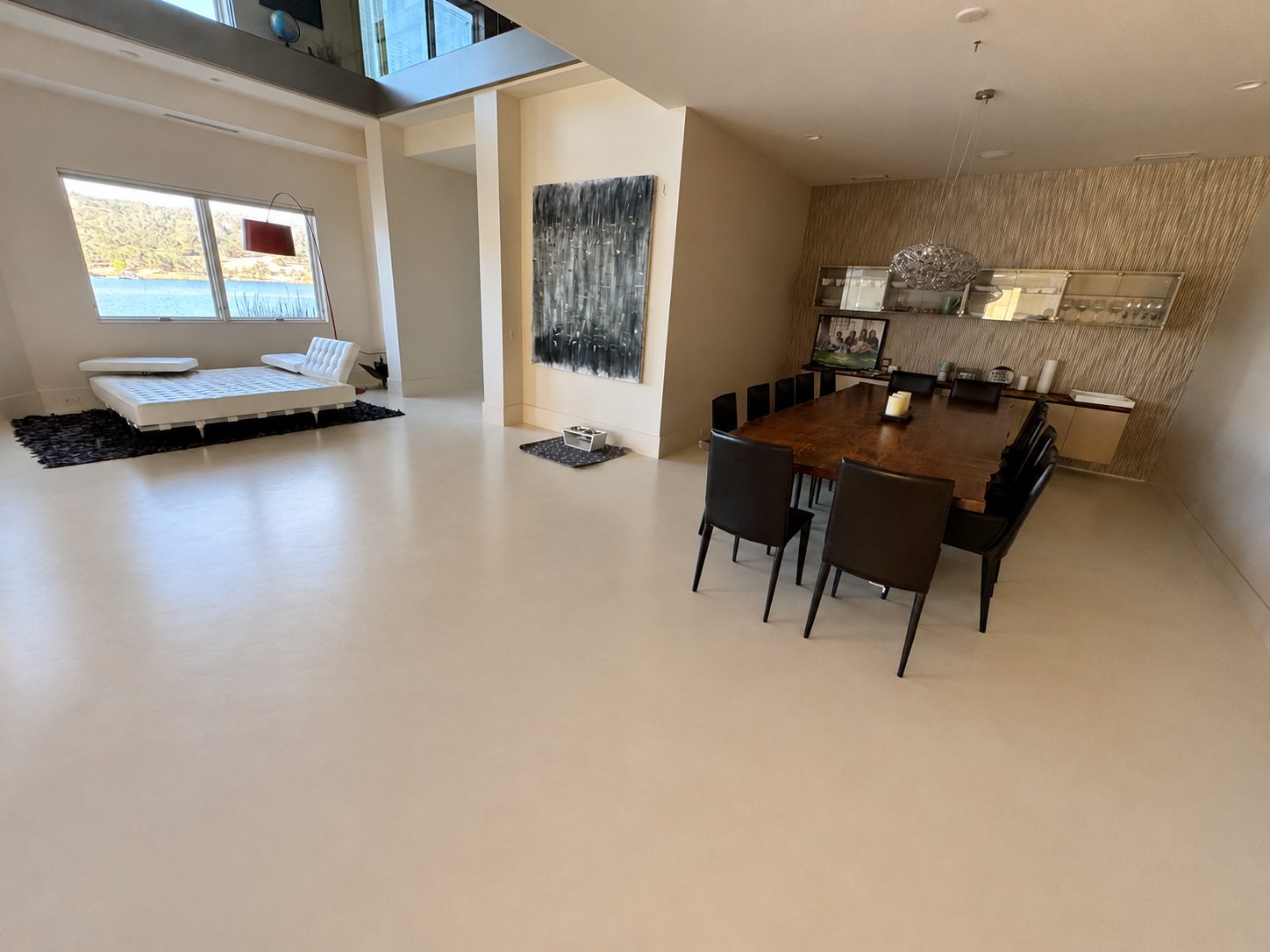 Gold Country · Open-plan living & dining
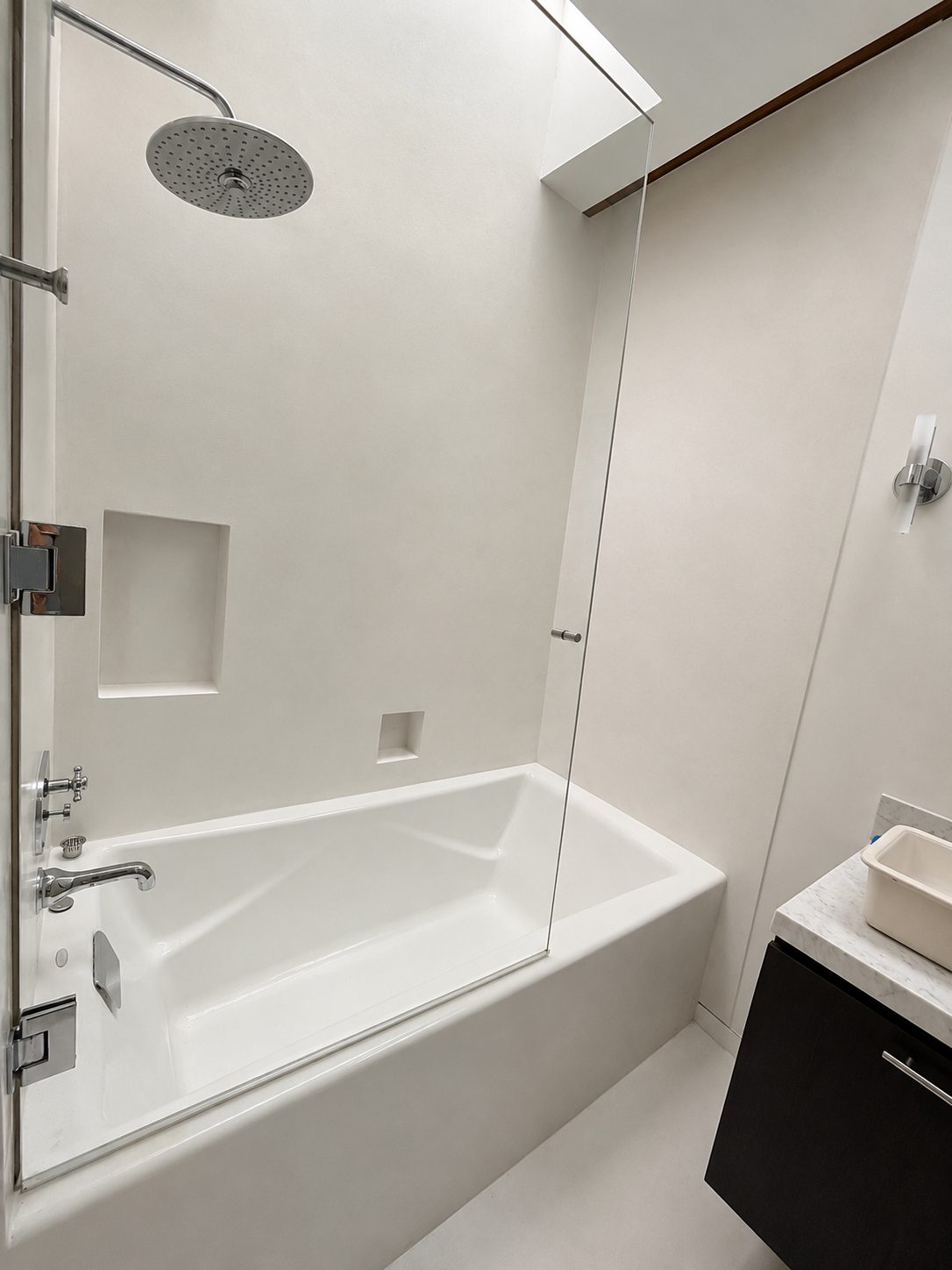 Beverly Hills · Bath & shower walls
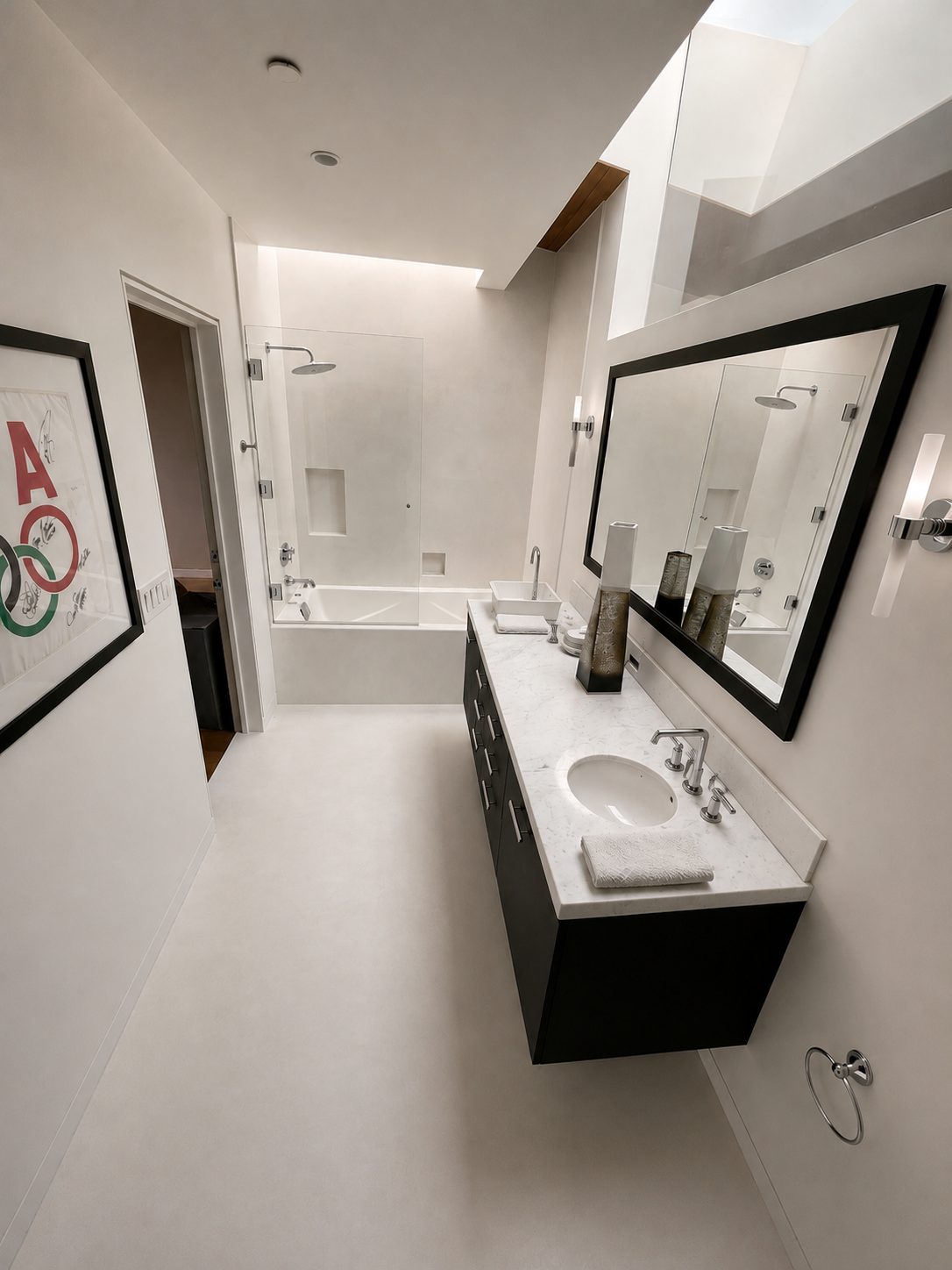 Beverly Hills · Bathroom floor & walls
Installation
All installations are carried out by qualified professionals with technical support from Topcret USA. Installation workmanship is the responsibility of the installing professional; Topcret USA's warranty covers Topcret products, not third-party installation.
For the most important projects, our own specialists execute the work to protect quality; a certified installer network covers select smaller projects. Either way, the substrate is evaluated and the system is specified before anything is installed — see our Substrate Preparation Guide and Technical Resources.
Wherever your project is, you speak directly with our specialists — not a sales rep.
FAQ
Tell us about the space — square footage, substrate and finish — and we'll reply with clear next steps, usually within one business day. Topcret USA — Official U.S. Distributor of Topcret.
Request a quote →Or call (213) 294-1989
Residential projects are contracted under a separate written agreement, provided and signed before any work begins. Submitting this form is a request for information and does not create a contract.